
When it comes to facial contouring, many people think of a "filler program" as their first choice. But there are other approaches that work differently, such as the Sculptra program, which is often discussed alongside it. This article explains what the Sculptra program is, how it differs in principle from a filler program, and what questions to prepare when you consult a doctor, so you can compare your options in an informed way.
What is the Sculptra program?
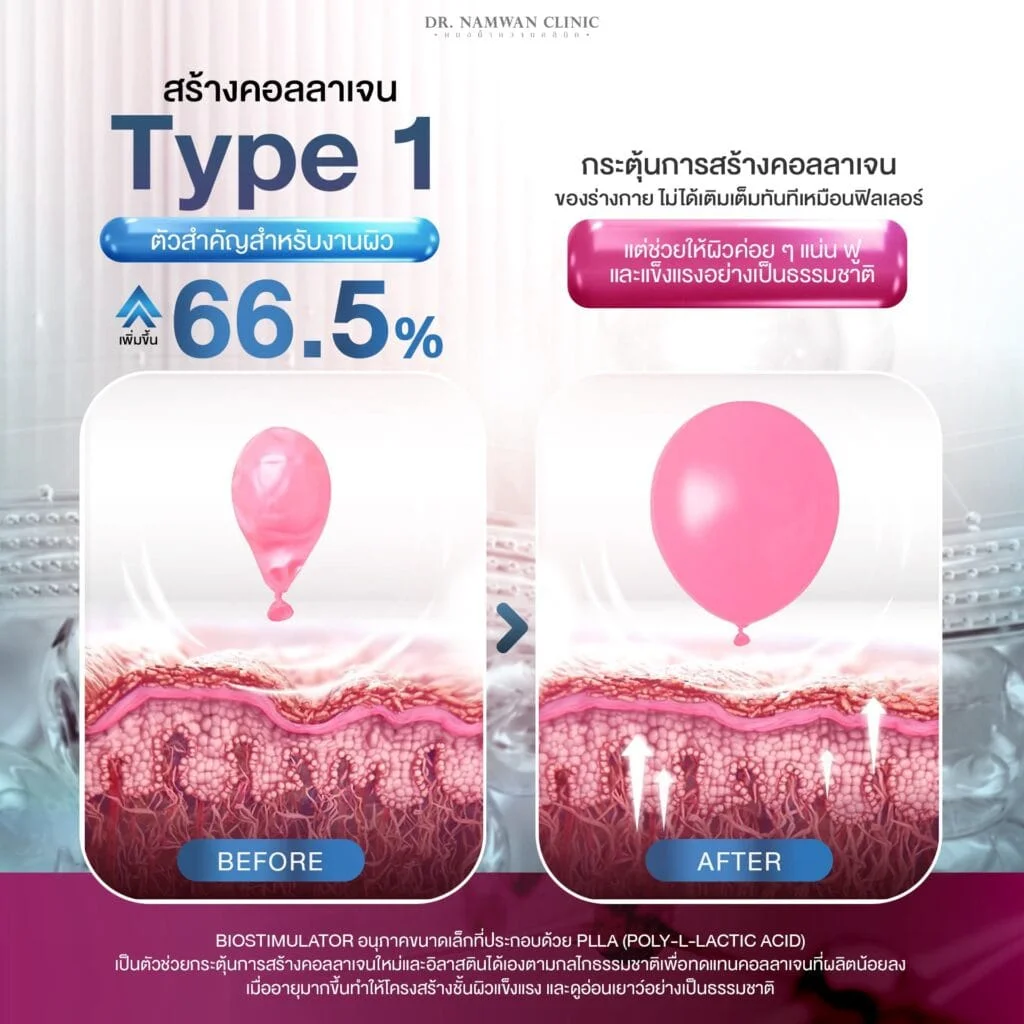
The Sculptra program uses an injectable from the collagen stimulator group. It works differently from a typical filler program in that it does not rely mainly on "filling" volume directly with the product itself; instead, it stimulates the body to produce new collagen of its own in the injected area. Results therefore appear gradually, following the body's collagen-building process, rather than showing the full change right after treatment.
Because of this principle, collagen-stimulating approaches are often considered for skin that lacks density, is sagging, or needs an overall improvement in quality, rather than for instant filling of specific spots. However, the actual indications and usage of the product must always be based on the product labelling and the doctor's assessment.
What should the doctor assess before comparing?
Before asking "Which is better, the Sculptra program or a filler program?", the question to answer first is "What is my problem?" Facial concerns that look similar may originate from different structural layers and respond to different approaches.
What the doctor usually assesses includes:
- Type of concern — localised volume loss, overall thinning of the skin, or sagging across several layers
- Skin condition and existing collagen quality — these affect how well collagen-stimulating approaches work
- Goals and expectations — whether you want immediate results or accept gradual results
- Health history and previous procedures — what was injected before, where, and whether there were side effects
- Budget and ongoing care plan — the number of sessions needed and follow-up appointments
These assessments mean that "suitable" has a different answer for each person, so there is no single best option for every case.
Questions for comparing the Sculptra program with a filler program?
How they compare
| Aspect | Sculptra | Filler |
|---|---|---|
| How it works | Stimulates the body to produce its own collagen | Adds volume directly with the product itself |
| Visible results | Appear gradually as collagen builds | Results visible sooner |
A different mechanism doesn't mean one option is better for everyone. What suits you depends on your concerns and the doctor's assessment.
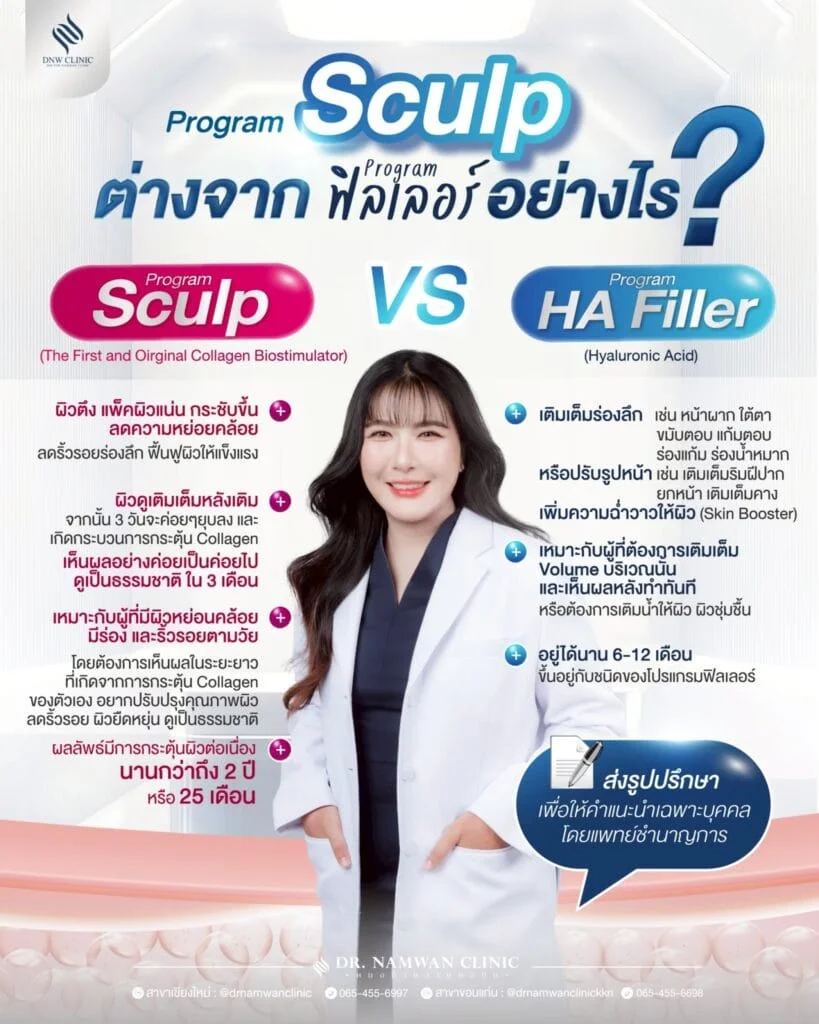
When you consult a doctor, try using this set of questions to compare the two approaches systematically
- How do they work differently — filling volume directly vs. stimulating the body to produce its own collagen
- Which approach suits my concern better, and why
- How do the results differ — fast or slow to show, and how natural they look in my case
- Roughly how long each approach lasts, and what kind of repeat plan is needed
- How the risks and side effects differ, including how problems are managed if they occur
- Whether they can be combined in some care plans
- How the overall cost across the whole treatment plan differs
The answers to these questions help show that being "different" in principle does not always mean "better or worse" — it means "suited to different kinds of concerns".
Who is it for / who should have a particularly careful assessment by a doctor?
In general, collagen-stimulating approaches are often considered for people with thin skin, a lack of density, or mild to moderate sagging who accept results that improve gradually over time, as well as those seeking an overall improvement in skin quality rather than filling specific spots.
Groups who should have a particularly thorough assessment by a doctor include people with autoimmune diseases, a history of allergy to product ingredients, inflammation or infection at the injection site, a tendency to form thick scars, or who take certain medications that affect blood clotting, as well as pregnant and breastfeeding women. Anyone who has had problems from other injections before should tell the doctor their full history.
The actual indications and contraindications of a product must follow only the product labelling and the doctor's judgement. Do not let reviews or advertising decide for you.
Preparation and follow-up
Preparation is generally similar to that for other injectables
- Fully disclose your health history, medications, supplements, allergy history and all previous procedures
- Consult the doctor about medications or supplements you may need to avoid temporarily, and stop them only as advised by the doctor
- If there is inflammation, inflamed acne or a wound in the treatment area, the appointment should be postponed
- On the day of the procedure, arrive with clean skin and allow extra time afterwards
After the procedure, follow the doctor's aftercare instructions strictly. This may include massaging the injected area as the doctor demonstrates (if it is part of the doctor's instructions) and watching for any unusual symptoms. Follow-up is very important for this type of approach, because results appear gradually and often need several assessments to decide whether further treatment is needed. If you have pain, severe swelling and redness, or an unusual lump, contact the clinic immediately.

If you are comparing the Sculptra program with a filler program or other facial contouring approaches, you can book a consultation with a doctor for a personal assessment at Dr.Namwan Clinic. Our medical team will help you plan what suits your concerns and goals before you decide.
The information in this article is general knowledge. Results depend on each individual's skin and concerns. Always consult a doctor before any treatment.
Frequently asked questions
When does the Sculptra program show results?
It is a procedure whose results appear gradually as the body builds new collagen; you do not see the full result right after treatment. The timeframe and number of sessions differ from person to person, so ask the doctor who assesses you directly.
In short, how is it different from a filler program?
A filler program adds volume directly from the product itself and shows results quickly, while the Sculptra program stimulates the body to produce its own collagen, showing results more slowly but through the body's own mechanism. Which is suitable depends on each person's concerns.
How many sessions are needed?
Collagen-stimulating approaches are usually planned as a course of several sessions rather than a single treatment. The number of sessions and the interval between them depend on the doctor's assessment.
Does it hurt?
Generally, a local anaesthetic is used before the procedure. How it feels during treatment varies from person to person. Afterwards there may be slight swelling or bruising that fades on its own. If anything seems unusual, tell the doctor.
Can it be combined with other procedures?
Some care plans can combine several approaches, but the doctor needs to design the appropriate order and intervals. You should not decide on your own to do several things at once.
Interested in Sculptra program?
Enquiries and appointments at both our Chiang Mai and Khon Kaen branches