

A thread lift is one of the most popular facial lifting procedures, because it involves no major surgery and less recovery time than surgery. But "non-surgical" does not mean it suits everyone. This article walks you through how it works, who it does and does not suit, how to choose a clinic, how to prepare and aftercare, so you have all your information and questions ready before consulting a doctor.
Assessing your concerns and goals
Before deciding on a thread lift, the most important starting point is understanding "what exactly is my concern", because facial sagging comes in many degrees and has many causes, such as loss of fat under the skin, collagen breakdown, or age-related changes in bone structure — and each of these responds differently to a thread lift.
In general, a thread lift works by inserting dissolvable threads beneath the skin to support and reposition the tissue. Some types also stimulate collagen production around the threads as they gradually dissolve. The results therefore include a part you see from the direct support, and a part that gradually improves as new collagen forms.
Before seeing the doctor, note down the concerns that worry you, such as hollow cheeks, sagging, deep nasolabial folds or an undefined jawline, and set realistic goals — whether you want to "look younger naturally" or "fix a specific area". Clear goals help the doctor accurately assess whether a thread lift meets your needs or whether other approaches should be combined.
Who it suits / have a doctor assess you first
In general, a thread lift is usually considered for people with mild to moderate sagging who want gradual results and are not ready for, or do not need, surgery. Actual suitability depends on each person's skin condition, tissue density and health factors.
Groups who should be assessed especially carefully by a doctor include people with underlying conditions, those taking blood thinners or medications that affect blood clotting, those with a history of allergy to materials, inflammation or infection on the face, or a tendency to form keloids, as well as pregnant and breastfeeding women. In addition, people with significant sagging may get limited results from a thread lift alone; the doctor may suggest another approach or combining it with other procedures instead.
Remember: no procedure is "right for everyone". Consulting a doctor directly is the step that answers this question most accurately.
Clinic selection checklist
Choosing where to have it done is as important as choosing the procedure. Use this checklist to help you decide.
- The facility is properly licensed, and the doctor performing the procedure has an identity and medical licence that can be verified.
- The doctor assesses you in person before treatment and explains benefits, limitations and other options — rather than offering the same package to every case.
- Threads with certification documents and a traceable origin are used, and the doctor is willing to tell you the type, model and why it was chosen.
- The price, number of threads, steps and follow-up appointments are disclosed transparently before you decide.
- There is a clear contact channel after the procedure in case of unusual symptoms.
- Before-and-after photos or exaggerated result testimonials are not used as a guarantee.
Aftercare and follow-up
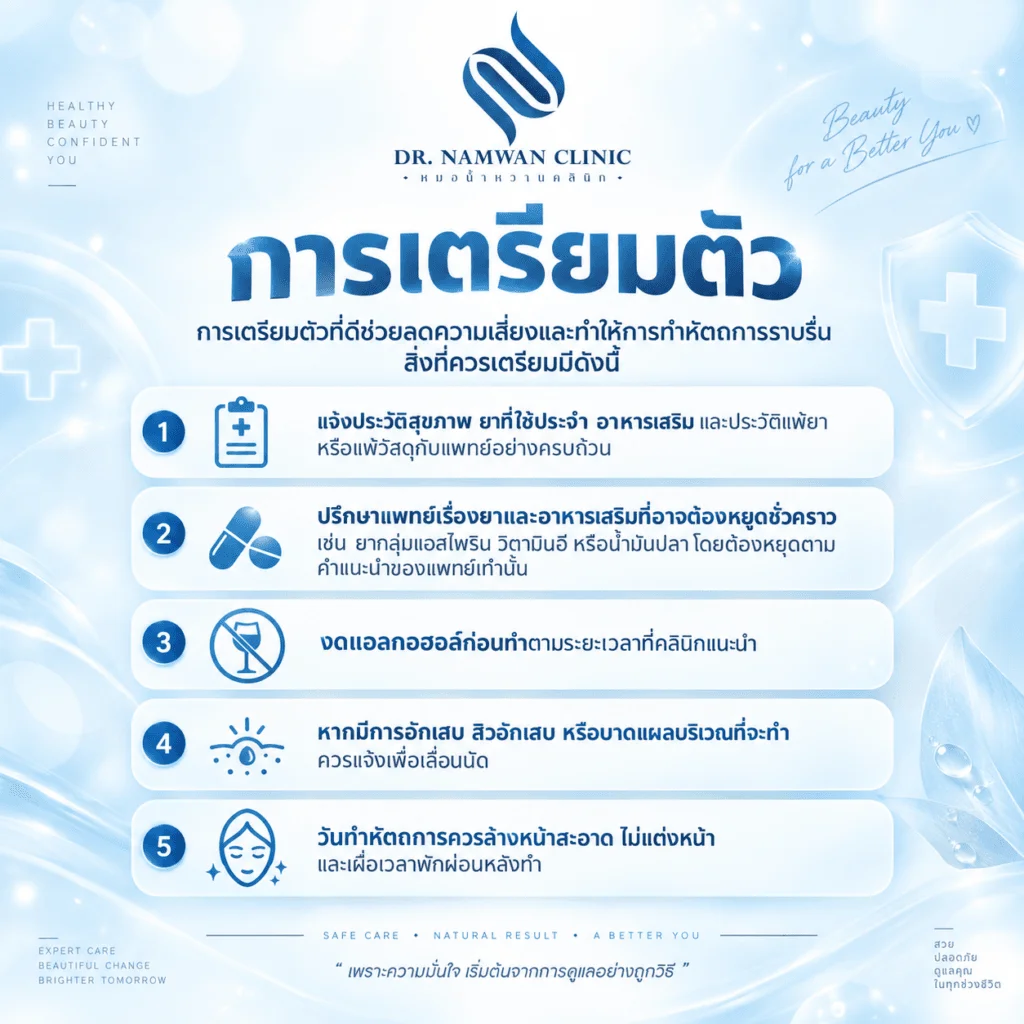
After a thread lift, common effects include swelling, bruising, tightness or mild pain in the treated area, which usually improve gradually on their own. However, follow the doctor's instructions strictly, such as avoiding massage or pressing hard on the treated area, being careful about opening your mouth wide or chewing hard food in the early period, avoiding intense heat such as saunas, and refraining from strenuous exercise for the period the doctor specifies.
Follow-up is as important as the procedure itself. Attend your appointments so the doctor can assess your symptoms and results, and if you notice anything unusual — such as increasing pain, red, hot swelling, fever or a visible thread end — contact the clinic immediately. Do not pick at it or try to deal with it yourself.
Results and how long they last vary by individual, depending on the type of thread, technique and the body's response. Ask the doctor who assesses your case directly for an approximate timeframe.
If you are considering a thread lift and want to know whether it suits your skin and concerns, you can book a consultation with a doctor for a personal assessment at Dr.Namwan Clinic. Our medical team is ready to answer your questions and plan what is right for you before you decide.
The information in this article is general knowledge. Results depend on each individual's skin and concerns. Always consult a doctor before any treatment.
Frequently asked questions
Does a thread lift hurt?
Generally, local anaesthetic is used before the procedure, so how it feels varies from person to person. Most people feel tightness or mild pain afterwards, which fades within a few days. If the pain is unusual, tell the doctor.
How long do the results last?
It depends on the type of thread, the number of threads, the technique and each person's response. There is no single figure that applies to every case; ask the doctor who assesses you directly.
How is a thread lift different from surgical lifting?
A thread lift suits mild to moderate sagging and has a faster recovery, but gives more limited results that are not as permanent as surgery. The doctor will help you weigh the options based on your actual concerns.
Can I go straight back to work afterwards?
Many people return to daily life quickly, but allow time for swelling and bruising and avoid strenuous activities as the doctor advises.
What if the results are not what I hoped for?
This is why you should choose a clinic with genuine follow-up appointments. The doctor will assess and plan ongoing care. Do not have it redone or corrected elsewhere without providing complete information about the original treatment.
Interested in Thread lift program?
Enquiries and appointments at both our Chiang Mai and Khon Kaen branches